
Tariq Al Hosani: Ethical Code Takes Priority Over Programming Code
Abu Dhabi – UAE
With the conclusion of the Artificial Intelligence sessions at the World Economic Forum (WEF) in Davos 2026, technology leaders departed the Swiss mountains amidst intense media buzz and dazzling futuristic headlines, yet without a clear answer to the most pressing question: Who protects humanity in the race for Artificial Intelligence?
Despite the global consensus that AI has become a cornerstone of the coming economic transformation, the Davos discussions revealed a troubling gap between the acceleration of innovation and the absence of governing ethical and human frameworks. The deficit was not in ideas or visions, but in commitments and guarantees, as if the future is being technically engineered before it is humanely debated.
In this context, Elon Musk returned to the forefront, not only by asserting that AI could surpass the collective intelligence of all humans within a decade, but also by proposing space as a sovereign solution to Earth’s crises. This involves transferring massive data centers to low-Earth orbit, leveraging unlimited solar energy and natural cooling. However, observers note that this proposal transcends a bold technical innovation, raising a highly sensitive sovereign question about the fate of global data control and digital decision-making.
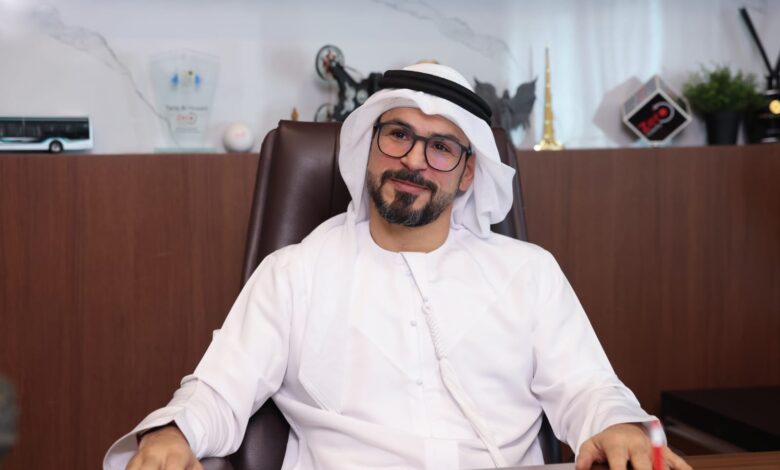
Commenting on these visions, Tariq Al Hosani, Founder and Chairman of Zero Gravity Group,believes that what Musk presents is not offered as a neutral prediction of the future, but rather as a process of collective mental conditioning to accept what he calls “technological determinism,” without sufficient discussion of its social and human consequences. He suggests that the repeated talk of AI superiority does not open the door to possibility, but rather closes the door to accountability, as if societies are called upon to surrender to what is coming instead of debating it.
Regarding the idea of moving data to space, Al Hosani warns that it could practically mean removing the human digital presence from the scope of legal and sovereign control of nations, transforming a technical solution into an undeclared political shift. When the keys to data move outside geography, they also move outside the traditional system of accountability, and the very concept of information sovereignty is redefined.
The concern does not stop at the limits of computing. The entry of human-like robots, notably “Optimus,” into the markets, does not just mean increased productivity as is promoted, but according to Al Hosani, a redefinition of human identity itself. When technology transforms from a digital mind behind screens into a physical entity moving among people, we are not just talking about lost jobs, but about the dismantling of the social contract that governed the relationship between humans and work for decades. This raises a question that the Davos sessions failed to answer: Who is the producer? Who is the consumer? And where does the human stand in this new economic cycle?
In conclusion, Al Hosani believes that the real conflict is not between companies or technologies, but between two contradictory concepts: meaning and efficiency. Technology may make the world more efficient, but it does not guarantee that it will be more just or humane. The problem, as he describes it, is not in the software code alone, but in the absence of an ethical code capable of guiding this accelerating power and controlling its effects on humanity and society.
Thus, with the accelerating re-engineering of the future through code and algorithms, the question remains open: If technology is capable of redefining work, sovereignty, and even consciousness… Is the human still the end goal, or has he become merely a variable within an equation he does not have the right to write?